Method 22: Protest Disrobings (CONTENT WARNING)

Note: images at the end of this post may be inappropriate for some work environments. 

My senior year in high school, I was given two weeks of detention after playing a song I wrote on the morning radio show. I cued up “Get Naked,” and then I bolted. I spent the rest of the morning getting screamed into a corner by my advisor:

“For the rest of your life, you will be nothing. You are nothing. No matter what you do from here, this is the best you will ever be.”

I didn’t even GET naked, I just used the word because I knew its power in my hometown of Churchville, New York. It was like my own Footloose moment – I was going out with a bang.

Public disrobing is an effective method of nonviolent protest because it gets people’s attention – but it’s only effective if the wobbly bits draw attention to the intended cause. A recent example of this was on Tuesday night, when Stormy Daniels folded her laundry and listened to Taylor Swift in her underwear live on Instagram for 8 minutes. Exactly 8 minutes – the time it took Trump to “formally” advocate for building a 5.7 billion dollar border wall.

The Russian punk art collective Pussy Riot and activists from the Ukranian group Femen (video above) have been leading the charge against Putin’s repressive state since 2008. Femen regularly stages topless protests against sex tourism, homophobia, religious institutions, and underage marriages. In 2012, they protested against voter fraud in the 2012 Russian elections. (ARE YOU READING THIS?) In 2013, members of Femen disrupted the visit of Russian President Putin and Chancellor Merkel at a tech show shouting obscenities, with anti-Putin slogans written on their bodies.

In 2012, two members of Pussy Riot were arrested for singing the punk protest song Putin’s Prayer in Moscow’s main cathedral. They spent two years in a Russian prison for “hooliganism,” something member Nadya Tolokonnikova described was a time of “endless humiliations.”

After their release, the activists pledged to devote their energies to changing the political system in Russia and improving conditions inside its prisons – but they haven’t stopped protesting. In 2018, members of Pussy Riot crashed the World Cup and were arrested for 15 days.

Public disrobing is not new: in the 1800’s, pacifist Ukranian immigrants called the Doukhobors (“spirit wrestlers) staged naked protests when the Canadian government wouldn’t give them the land they were promised, and this continued into the 1970’s.

The annual Running of the Nudes in Pamplona, Spain, protests the cruelty of the centuries-old tradition of the running of the bulls. PETA’s “Lettuce Ladies” dress in lettuce bikinis and hand out flyers about veganism. Breasts Not Bombs, Naked for Peace, Bare Warning – all protests against war.

Women in Uganda have protested naked because their farming land is under threat of being acquired by the government as a game reserve. For the Acholi people of northern Uganda, a woman stripping in public is more powerful than fighting because it’s believed that these actions bring worst of curses on the woman’s enemy.

Today’s Action Item: #ballstothewall 

Today is Day 22 of the government shutdown. Drop’em, guys. See what you can do about this shutdown. If it goes viral, please send cash.

This slideshow requires JavaScript.

“We believe that if women are left with little more than satisfying sexual desires as a life purpose, then our sexuality must become politicised. We are not denying our potential to be treated as sex objects. On the contrary, we are taking our sexuality into our own hands, turning it against our enemy. We are transforming female sexual subordination into aggression, and thereby starting the real war.” – Inna Shevchenko, Femen, for The Guardian
3.5% Project

About

Publications

Subscribe

Method 21: Delivering Symbolic Objects

When Nancy Pelosi was reelected as Speaker of the House for the second time last Thursday, her return to power was symbolized by a return of the gavel. Watch the moment here:

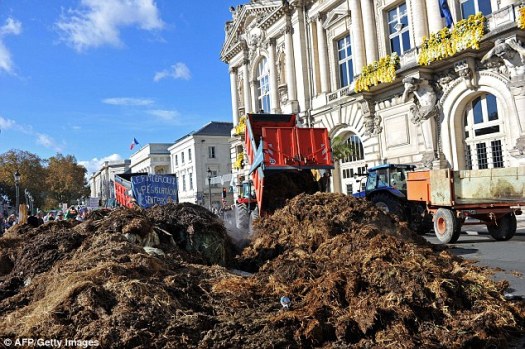
The delivering of symbolic objects is a favorite method of peaceful protest, and has been used throughout history as a way to send a message to those in authority that they’re not backing down. The French are famous for this – farmers are fond of delivering fresh manure and rotten vegetables to government offices to protest depressed wages or overburdensome taxes. When Chicago’s rat problem overwhelmed the city, a housing improvement program piled dead rats against the mayor’s door.

frenchmanure

There are risks to this kind of protest – they can contribute to increased animosity between groups – but the message gets across.

On Valentine’s Day in 2017, “Readers are Leaders” hosted the event “Bury the White House in Books on Valentine’s Day,” encouraging people to send books they thought Trump could stand to read. Some suggestions:

  • Silent Spring, by Rachel Carson
  • Animal Farm, by George Orwell
  • The Art of Power, by Thich Nhat Hanh
  • The Man Without a Face: The Unlikely Rise of Vladimir Putin, by Masha Gessen
  • The Lorax, by Dr. Seuss: A children’s tale about the environment
  • Night, by Elie Wiesel: An iconic account from a Holocaust survivor and Nobel Laureate
  • The Jungle, by Upton Sinclair: A piece of investigative journalism that explores the conditions and treatment of poor factory workers
  • Somebody Loves you, Mr. Hatch, by Eileen Spinelli, a children’s tale about the power of kindness

What book would you send Trump?

I know, I know, he doesn’t read – but maybe someone close to him can give him the important points. Let me know if you need the address – I’ll be there on the 19th.

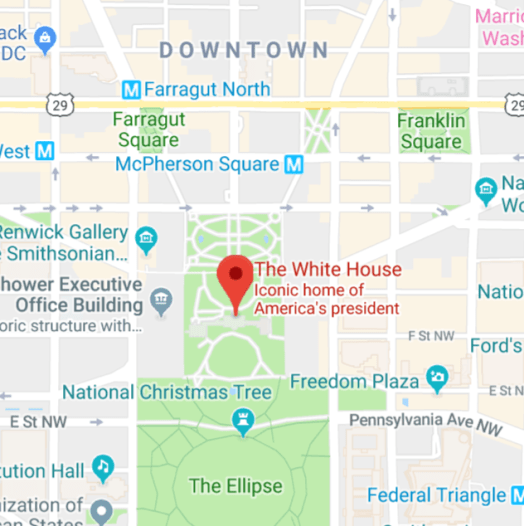
https://www.google.com/maps/place/The+White+House/@38.8976763,-77.0365298,15z/data=!4m5!3m4!1s0x0:0x715969d86d0b76bf!8m2!3d38.8976763!4d-77.0365298

3.5% Project

About

Publications

Subscribe


What’s On My Nightstand: December 2018

Nonfiction/Memoir

Some Bright Morning I’ll Fly Away, by Alice Anderson

When They Call You a Terrorist: A Black Lives Matter Memoir, by Asha Bandele and Patrisse Cullors

Dreaming the Dark: Magic, Sex, and Politics, by Starhawk

Fiction

Blood and Guts in High School, by Kathy Acker

The Answers: A Novel, by Catherine Lacey

Short Fiction

“Surplus Male,” by Caitlin Bagwell, NUNUM

“Acceptance Journey,” by Mary Gaitskill

“Staring at His Converse Tennis Shoes,” by Anne Gudger, 50-Word Stories

“Two Sisters,” by Ludmilla Petrushkevskaya

“Time for the Eyes to Adjust,” by Lin Ullman

Young Adult Fiction

The Hate You Give, by Angie Thomas

Poetry

“Prognosis,” by Meena Alexander

“Arrival at Santos,” by Elizabeth Bishop

“Dinah,” by Sarah Blake

“Saturday,” by Caryl Pagel

“The Sagittarius” and “A Song of Monsoon and Blood Lava,” by Pamela K. Santos

Journal

The Paris Review, No. 227, Winter 2018

Ploughshares Fall 2018

Essay / Interview / OpEd

“Roxane Gay: ‘Public Discourse Rarely Allows for Nuance. And see where that’s gotten us,” by Aida Edemarium, The Guardian

“The Thread: Outside the Gaze,” by Marissa Korbel, The Rumpus

“I Used to Give Men Mercy,” by Therese Mailhot, Guernica

“Why You Should Be One Too?” by Spencer Reed, Granta

Catalogue

Mt. Airy Learning Tree Winter 2019 Course Catalogue

Magazine / Newspaper

Lesbian Connection: free to lesbians worldwide, but the suggested donation is $7/issue (more if you can, less if you can’t), January/February 2019 issue

The New Yorker

The Week

Random

author photo (below), photograph and styling by Gracie, age 5

HURRAW! lipbalm

pomegranate majolica dish

hummingbird Xmas ornament, made by Nicolle

ginger cookies, made by Echo Bodine)

Smith’s Rosebud Salve

lavender bath salts, made by Charlotte

Leigh_by Gracie_Xmas2018
author photo, photograph and styling by Gracie, age 5

About

3.5 % Project

Publications

Postage

Teaching

Method 20: Prayer and Worship

If the words “prayer” and “worship” from Method 20 of 198 Methods of Nonviolent Action give your secular bones a shiver, I get it – it’s hard to walk willingly into a place that tells you you’re wrong. Instead, think of Emma Gonzalez’s 6 minutes at 20 seconds of silence at the podium at the March For Our Lives. Consider the thousands who gather in Hong Kong on June 4 every year in honor of those massacred at Tiananmen Square in 1989. Or the communities across the nation who gathered for a prayer vigil after the violence at the Tree of Life synagogue in October 2018.

I’m a new fan of Sister Susan Francois, a nun at the Sisters of St. Joseph of Peace in Englewood Cliffs who tweets prayers at Trump every day.

SisterSusanFrancois

Finally, I loved this recent NPR interview with Moby, especially when Stephen Kallao described elements of Moby’s latest record, Everything Was Beautiful, and Nothing Hurt as a kind of prayer. Of his new song, “This Wild Darkness,” Moby said:

“… we’ve found ourselves as these bald, scared monkeys essentially in control of a planet and, looked at with some sense of objectivity, doing everything in our power to destroy the only home that we have.”

The refrain:

Ooh, in this darkness

Please light my way

Light my way

3.5% Project

About

Publications

Subscribe

Method 19: Wearing of Symbols

Step 19 of Gene Sharp’s 198 Methods of Nonviolent Action comes from the list of Symbolic Public Acts. As I covered in Step 18, the resistance has used flags and symbolic colors as a form of protest throughout history.

Pussy hats, peace signs, rainbow flags.

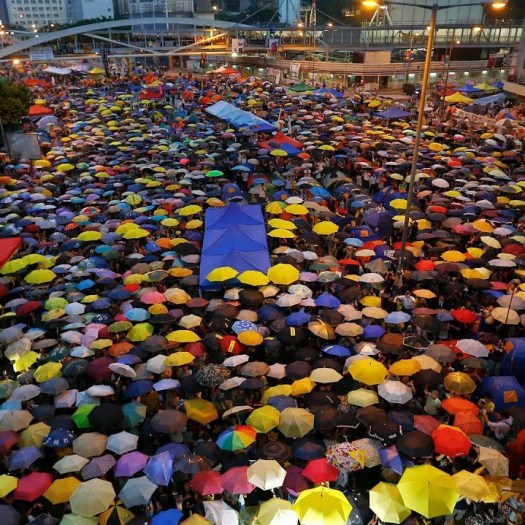
Umbrellas, three finger salutes, hoodies, flowers.

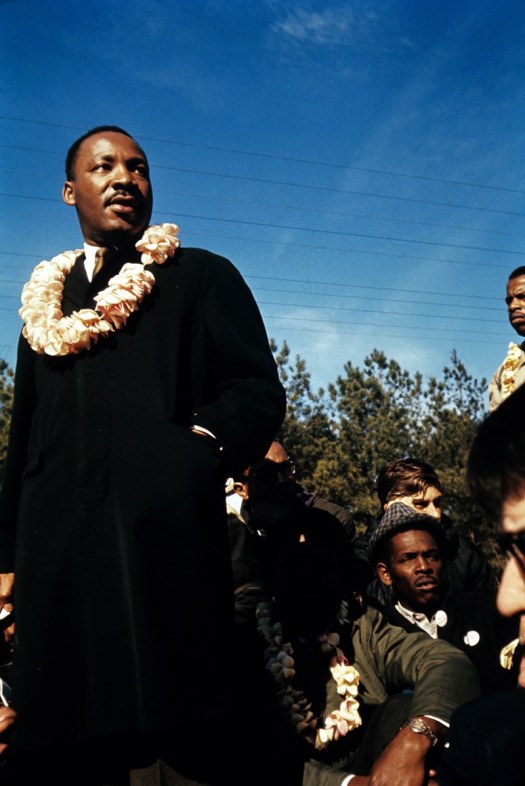
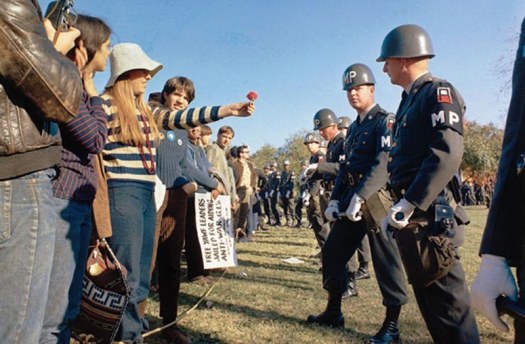
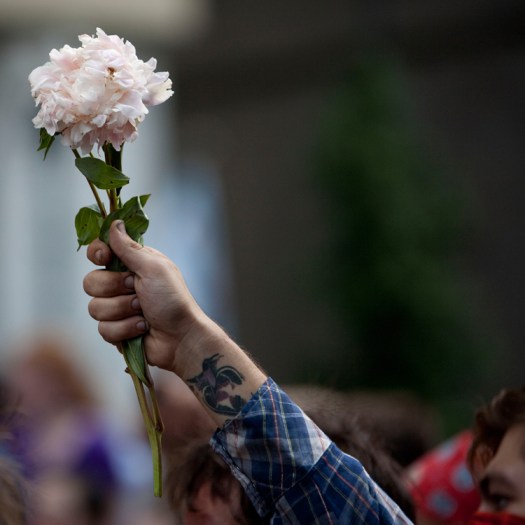
Flowers epitomize peaceful protest. They were offered to soldiers at the Pentagon in 1967 and handed out to demonstrators at the Women’s March in 2017. They were worn by Dr. King, a way of saying, “I will meet your hate with dignity and grace.”

A botanical “When they go low, we go high.”

photo: Michael Jarecki
symbols_threefingers
Protesters against military rule gesture by holding their three middle fingers in the air during a brief demonstration at a shopping mall in Bangkok. (Erik De Castro/Reuters)
symbol_umbrella
A protester raises placards that reads “Occupy Central” in a standoff between riot policemen and a sea of protesters and their umbrellas outside the government headquarters in Hong Kong, Saturday, Sept. 27, 2014. (Vincent Yu/AP)
symbols_treyvon
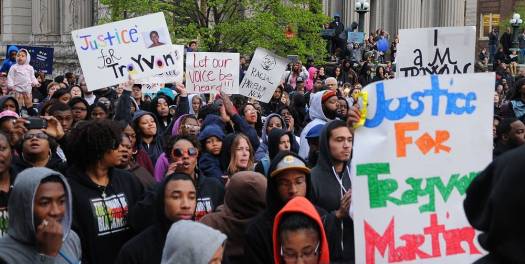
Speakers at a gathering in Minneapolis to remember slain Florida teen Trayvon Martin said his death should be a rallying cry for racial justice in the country.

rainbow-flag-banner-big-toulouse

3.5% Project

About

Publications

Subscribe

Method 18 + Ukulele Challenge + #SmockingGun

Today’s post in 3 points:

Ukulele Challenge: On Thursday I posted a new ukulele tune: “Mueller, please hurry up.” People tell me it’s “adorable” and that definitely wasn’t the plan, but whatever – maybe the collective vibe worked, because:

Mueller Investigation: From the Washington Post: “Russians interacted with at least 14 Trump associates during the campaign and transition,” along with this fun graphic. (credit: WashingtonPost) Sh*t’s going DOWN.

Screen Shot 2018-12-10 at 11.56.23 AM

Step 18 in Gene Sharp’s From Dictatorship to Democracy is “Display of Flags and Symbolic Colors.” Some more examples that we’re not just making this sh*T up:

Since November 17, 125,000 protestors have taken to the streets of Paris wearing the yellow vests required to be carried in every vehicle by French law as a protest to rising diesel costs. Although the movement hasn’t been without violence – windows smashed, cars burned, and shops looted – the movement’s core aim “to highlight the economic frustration and political distrust of poorer working families, still has widespread support.” On Friday, the French retail federation told Reuters that retailers have lost about $1.1 billion since the protests first began on November 17, and that the restaurant trade had declined by between 20% and 50%.

As I covered two weeks ago, sustained, silent, nonviolent protest of just a small group of committed members can make lasting change. Kindergarten teacher Sam Goldman is at the helm of Philadelphia’s “Resist Fascism Philly,” and last weekend I’d planned to pull on a red handmaid cloak and do some caroling until the event was cancelled to protest in another location. Pink pussy hats and red handmaid cloaks make a statement wherever they appear. When I’m wearing my kitty hat in my Philly neighborhood, I get smiles and nods, but on the boardwalk in a conservative county New Jersey? Stares. Silence.

That’s the power of Step 18.

Stay the course.

This slideshow requires JavaScript.

3.5% Project

About

Subscribe

Method 17: Mock Elections / DEPORTATIONS TO BEGIN

The ALL CAPS front page of the April 9, 2016 edition of Boston Globe read “DEPORTATIONS TO BEGIN,” and was dated April 9, 2017. The front page was an imagined the dystopian world under Donald Trump, and it included articles like “Market sinks as trade war looms,” a new libel law targeting “scum in the press,” and an address by Trump to the nation, saying illegals would be deported “so fast your head will spin.”

In a scathing editorial, the Globe called the mock-up “an exercise in taking a man at his word.”

“Donald J Trump’s vision for the future of our nation is as deeply disturbing as it is profoundly un-American,” it read.

And here we are.

Step 17: “Mock Elections,” from the blueprint to start a revolution, is a nonviolent tool that allows people’s voices to be heard before the real damage is done. One week before Election Day in 2016, the American Statistical Association released the results of a mock presidential election comprised of the votes of high school and college students from 19 states. A whopping Ninety-seven percent of participants favored Clinton – with 49.3% of the popular vote versus 43.3% for Trump.

We know the bad news.

The good news is that many of those underage voters will have turned 18 by 2020, and they’re pissed.

What to do? Pay attention next time you see news about mock elections. Don’t underestimate their power when you see their reappearance in early 2020 – let them be a warning. Make that sh*t go viral.

Step 17: Mock Elections

3.5% Project

About

Subscribe

What’s On My Nightstand: November 2018

Nonfiction/Memoir

When They Call You a Terrorist: A Black Lives Matter Memoir, by Asha Bandele and Patrisse Cullors

Art & Fear: Observations On the Perils (and Rewards) of Artmaking, by David Bayles and Ted Orland

The Art of Misdiagnosis: Surviving My Mother’s Suicide, by Gayle Brandeis

The Constitution Today: Timeless Lessons for the Issues of our Era, by Akhil Reed Amar

Fiction

The Last to See Me, by M. Dressler

Short Fiction

“The Deer-Vehicle Collision Survivors Support Group,” by Porochista Khakpour (Guernica)

“The Proxy Marriage,” by Maile Malloy (The New Yorker)

“The Sex Lives of African Girls,” by Taiye Selasi, (Granta)

Young Adult Fiction

The Hate You Give, by Angie Thomas

Music Together Teacher Training Manual

“Hello, Everybody!” Music Together: Family Favorites

Poetry

“Perhaps the World Ends Here,” by Joy Harjo

Leaves of Grass, by Walt Whitman

The Love Poems of Rumi, edited by Deepak Chopra

Journal

Carnegie Science, Fall 2018

The Paris Review, Issue 225

Ploughshares Fall 2018

Essay / Interview / OpEd

Toward a More Radical Selfie, by India Ennenga (The Paris Review)

The Guardian view on Donald Trump’s credibility: America’s compromised leader (The Guardian)

Meet the New Freshmen in Congress: More Democrats, Diversity and Women, by Catie Edmonson and Jasmine C. Lee

Magazine / Newspaper

Lesbian Connection: free to lesbians worldwide, but the suggested donation is $7/issue (more if you can, less if you can’t)

The New Yorker

The Week

Vanity Fair

Random

beach shells

Betron earbuds

blue light blocking glasses, Pixel

The Master Key pitch pipe

ukulele cheat sheet


About

Publications

Postage

Teaching

Method 16 + Picketers rush White House gates moments after President Trump lies to press on camera

This morning, as President Trump lied on camera about his business activities in Russia, a crowd of picketers rushed the White House gates.

Screen Shot 2018-11-29 at 11.54.16 AM

No, not really. But why the f– aren’t we?!

Have you watched this?

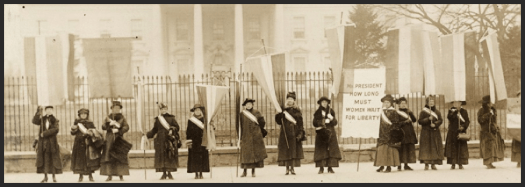
On Jan. 10, 1917, twelve women silently gathered in Lafayette Square, directly across the street from the White House’s north lawn, and sparked a protest that would later contribute to granting women the right to vote. They were known as the “silent sentinels,” the first picket line to ever take place at the White House.

During that year, more than 1,000 women from across the country joined the picket line outside the White House. Between June and November, 218 protesters from 26 states were arrested and charged with “obstructing sidewalk traffic.”

On June 4, 1919, women were granted the right to vote.

That’s 510 days from picket line to amendment.

There are 704 days until November 3, 2020.

The end.

suffragettes1917protest

IMG_4682.PNG

3.5% Project

About

Subscribe

19 degrees

Thanksgiving Eve, east to west. 19 degrees. The season of bracing winds and empty seats. Grief understands life in the sparest terms: before and after. Years like this, spent looking through a window into the past, at the sky, for signs. Sunsets like this one, or the first star, and then she’s there, ahead, maybe a year or a month or a day’s walk if you keep moving. Hope.

46742263_10218275367134759_1924132841663234048_n (1)46634471_10218275367054757_2120252550321012736_n46522677_10218275367734774_1429254211463282688_n