Before I get to today’s post, a quick reminder that the new course I’m co-facilitating at Corporeal Writing begins on Sunday. I’ve posted my thoughts on how my first online class with Lidia Yuknavitch revolutionized my writing career on Instagram.
On Tuesday, The Intelligencer published the article “12 Young People on Why They Probably Won’t Vote,” and it stirred up frustration on social media when I posted it. Some of the reasons given by the 21-29 year olds interviewed were:
“I feel like the Democratic Party doesn’t really stand for the things I believe in anymore. Why should I vote for a party that doesn’t really do anything for me as a voter?”
“I’m trying to register in my hometown of Austin, Texas. It’s such a tedious process to even get registered in Texas, let alone vote as an absentee. There’s no notification service about the status of my voter registration.”
“It was easier to get my medical-marijuana card — not a right, or even federally legal — than it was to register to vote.”
“I vote when I feel like I have to. But I mostly consider it something that sucks a lot of people’s time and energy away from actually building power with the people around them.”
Don’t blame them – blame us. This country is in desperate need of voter reform. If I could afford to hire a skywriter to fly across the country to tell everyone to vote on November 6, I’d do it. Skywriting is Step 12 in how to destroy a dictatorship, and although it’s a rare art in the U.S. today, it’s still used in nonviolent movements around the world.
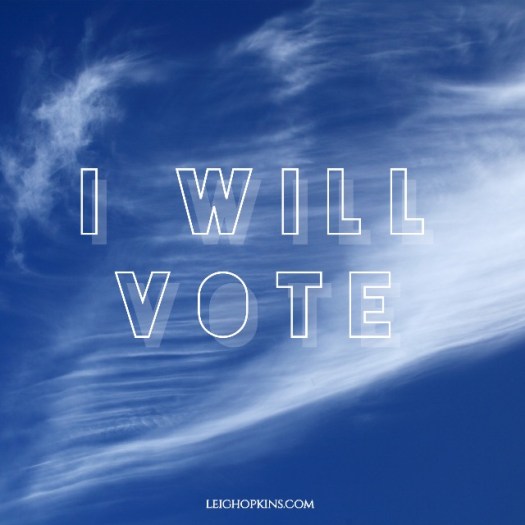
For the love of everything, talk to every under 30 eligible voter in your life and encourage them to vote in this election. No vote means a vote FOR this. Click on the “I WILL VOTE” image below to find out where your poll place is, and please share the link – liberally.
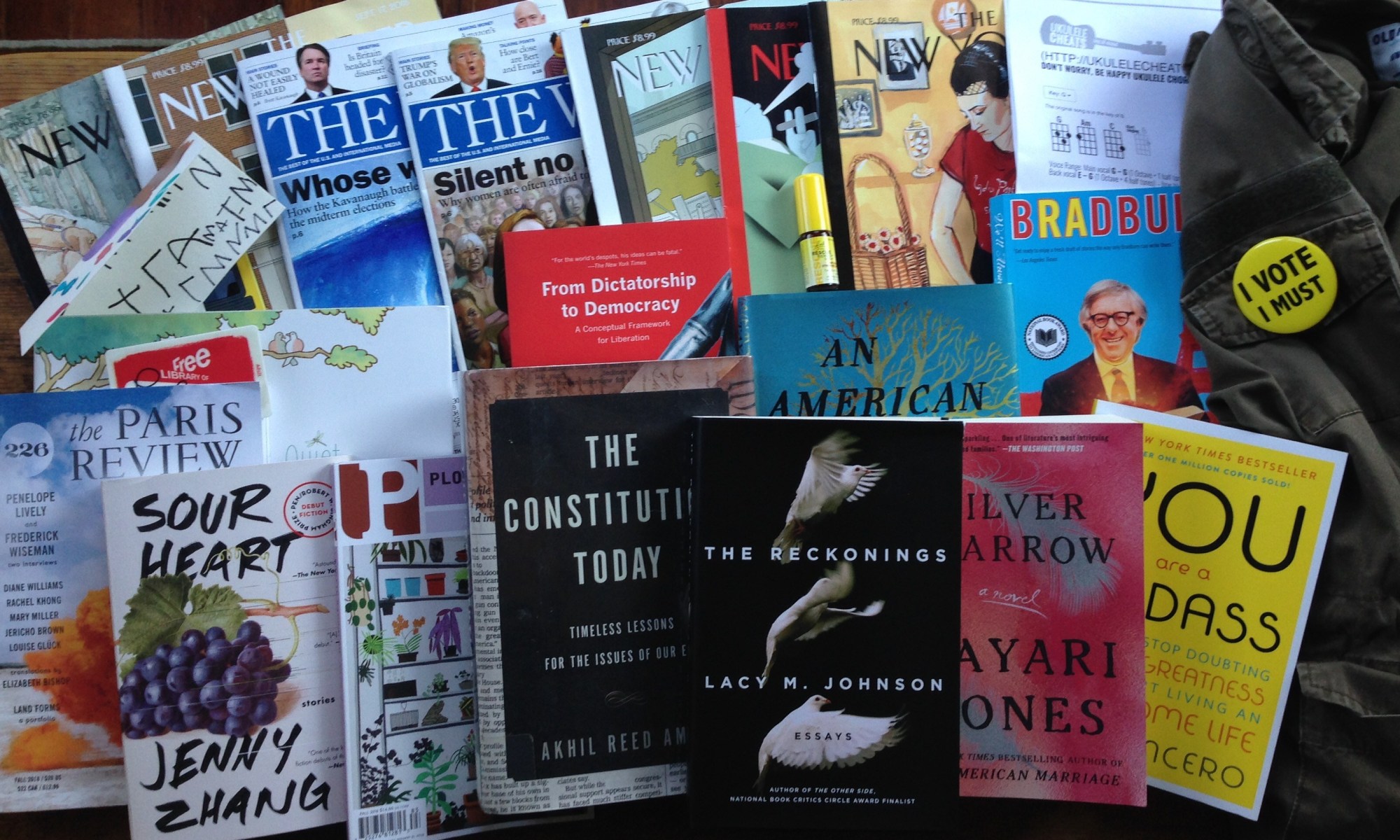
I was posting the pile on my nightstand every month but got sidetracked, so I’m sure I’ve missed something. A quick note on two important favorites:
The Reckonings, by Lacy M. Johnson
When I read my friend Kelly Thompson’s Guernica interview and this NPR review of Lacy Johnson’s newest book of essays, I knew I needed to own a copy. This morning I read the last paragraph of the first essay about ten times while crying into my coffee. If you’re a trauma survivor, this book is a balm.
The Constitution Today: Timeless Lessons for the Issues of our Era, by Akhil Reed Amar
I don’t remember how I heard about this 2016 book on constitutional journalism by Yale law professor, Akhil Amar. I ordered it from my public library and received a notice that it was available yesterday, just hours after the GOP-in-Chief announced that he was rethinking the 14th Amendment. The Constitution Today is described as a “handbook for thinking constitutionally about today’s headlines,” and I’m already knee-deep. (Check out p. 240 for a breakdown of what the 14th Amendment has to do with same-sex marriage for your daily dose of brain-burning.)
What’s On My Nightstand
Fiction
An American Marriage, by Tayari Jones
Silver Sparrow, by Tayari Jones
The Vampire Gideon’s Suicide Hotline & Halfway House for Orphaned Girls, by Andrew Katz
“Little Dog’s Rhapsody in the Night” by Mary Oliver
“Bees,” by Maya Ribault
Magazine / Newspaper
Lesbian Connection: free to lesbians worldwide, but the suggested donation is $7/issue (more if you can, less if you can’t)
The New Yorker
The Week
Vanity Fair
Random
“I VOTE / I MUST” button (given to me by my local postal worker after we talked about the pipe bombs sent and I showed her my “VOTE” t-shirt. She reached behind her and dug through a box and said “A sweet old lady named Mrs. Lovejoy makes these buttons, and she said to give them to whoever needs them, so I’m giving this one to you.”)
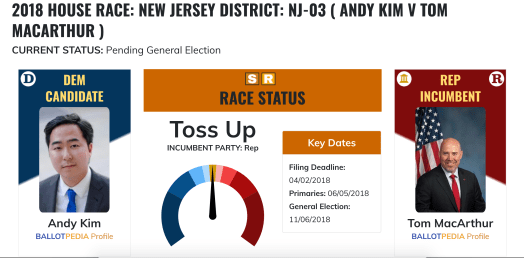
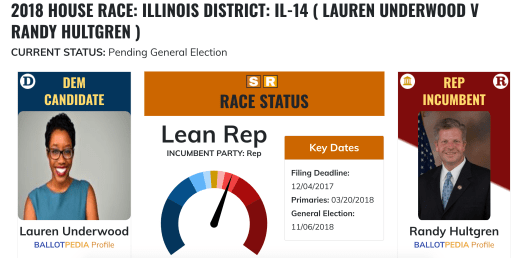
Check out this spreadsheet of the battleground or “toss-up” races, and you’ll see that the list is made up of women, people of color, LGBTQ candidates, Rhodes scholars, a few former Obama administration staffers, and many, many first-time candidates. These are people who care about more money for education, banning assault weapons, providing funding for accessible, effective opioid treatment centers, and increased access to affordable healthcare.
In some of these races, the Republican candidate is ahead by a margin of less than 0.5%.
We can help.
Just 4 clicks
Today, I’m taking to social media to provide links about where to make donations and how to canvas in support of these candidates. Click the images below to spread the word, or if it’s easier, feel free to share or retweet my posts.
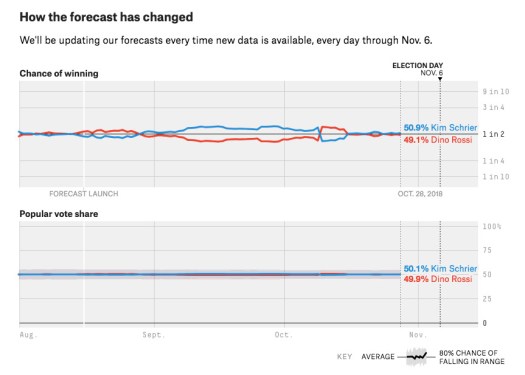
Midterm elections are 9 days away, and there are at least 79 U.S. House battleground seatsand31 races that are still too close to call. In some races, the margin is less than 1%, and it’s changing all the time. (As an example, look at the WA-08 race below.) On November 6, Democrats will need to gain just 23 Republican House seats to win the majority.
If you want to make an immediate impact today, do any of the following:
Donate to the campaigns. During these final days, your contributions will pay for more airtime for candidates, which helps to reinforce and mobilize the base while giving undecided voters another look. I recommend prioritizing the candidates marked with the greatest urgency (!!!!!!) on this spreadsheet (made by my fantastically brilliant wife).
Share social media links from the website of the candidates in the closest races, especially those marked with the greatest urgency (!!!!!!) on this spreadsheet.
Get informed. Who represents you in Congress? If you’re not sure who’s up for election, enter your zip code here to find out.
Who are the candidates?
Coming up next. (P.S. many of them are women, people of color, veterans, civil rights lawyers, Rhodes scholars, teachers, pediatricians … )
Tonight’s post comes with a playlist. Step 11 of Gene Sharp’s 198 steps of nonviolent action emphasizes the vital role of television, radio, and music in creating effective political action. I’m posting this a few hours after CNN announced that explosive devices were delivered to the offices of CNN, Hillary Clinton, and Barack Obama. Just a few days ago, this news pretty much stopped my heart. T– Who Shall Not Be Named talked of the need for the nation to stay united, saying that “threats or acts of political violence have no place” in the US. Then, he turned around and continued his attacks on the media during a rally in Wisconsin.
Because I feel like we could all use an anthem right now, this post focuses on the power of music. In times of political turmoil, music is about more than entertainment – it serves as a tool for voicing the political positions of the people, and it’s an effective way to engage and ignite the energy of large crowds.
It’s 9 pm here in Philadelphia and I’m posting this as a reminder to all of us that THIS WORKS. These are some of my favorites – feel free to leave yours in the comments.
“If there’s any hope for America, it lies in a revolution. And if there’s any hope for a revolution, it lies in Elvis Presley to become Che Guevara.” – Phil Ochs
“Mississippi Goddam” – Nina Simone
“Free Nelson Mandela” – The Special AKA
“Free Nelson Mandela” was a Top 10 hit in the United Kingdom for The Special AKA in 1984, and it instantly became the unofficial anthem and slogan for the international anti-apartheid movement.
“Why is Your Heaven So Small” – Susan Werner
My brilliant friend Susan Werner’s song, “Why is Your Heaven So Small” has been ringing in my ears all day. If it gets inside you, please share it.
“Get Up Stand Up” – Bob Marley and the Wailers
“Drawing from their troubled island’s political strife and its musical traditions, Marley and Tosh built their track on a bedrock of groove and a strong lyrical statement of fact: unalienable rights are not reserved for a special class or for those who wait patiently for greener pastures; rather, all human life under the sun is of equal value, right here and right now. At once a cry to rally and a call for prayer, “Get Up Stand Up” still remains an all-purpose change anthem, nearly 40 years after it was first sung.” – Paste Magazine
“March of the Women” – Dame Ethel Smyth
Dame Ethel Smyth wrote the March of the Women (1911) for the Women’s Social and Political Union, the leading organization of the suffragists in Britain. Not only was she the first woman composer ever to be made a Dame, she was the first (and possibly only) composer of any gender to conduct her own music in prison using a toothbrush for a baton.
“Quiet” – Milck
In January 2017, the Los Angeles-based singer-songwriter Milck (real name Connie Lim) released a song that became an unofficial anthem of the Women’s March in Washington DC. “Quiet” was a reflection of Lim’s frustration over societal expectations for women to remain quiet, unseen and unheard, and a reaction to her own experiences of domestic violence and having an eating disorder. She timed its release to coincide with the series of Women’s Marches being held around the world.
.
“Revolution” – The Beatles
“Count me out if it’s for violence. Don’t expect me on the barricades unless it’s with flowers.” – John Lennon, 1980, about how “Revolution” still stood as an expression of his politics.
“Ohio” – Crosby, Stills, Nash and Young
Days after the Kent State massacre, Neil Young saw a photo of 14-year-old Mary Ann Vecchio kneeling over the dead body of college student Jeffrey Miller. He poured his rage and sorrow into the lyrics to “Ohio” and called his bandmates into the studio the following day to record the new song.
“Putin Will Teach You How to Love” – Pussy Riot
Pussy Riot is flatout badass, and their approach to protest mirrors effective practices in other nonviolent movements: the leadership and membership is fluid. Founded in August 2011, it has a variable membership of approximately 11 women ranging in age from about 20 to 33. Given the staging of this year’s World Cup tournament in Russia, it seemed inevitable that a Pussy Riot protest would take place. The group chose the final game for their protest – which was screened to an audience of millions across the world – and the group later confirmed that it had taken place in protest of human rights abuses in Russia.
“The Revolution Will Not Be Televised” – Gil Scott-Heron
Gil Scott-Heron’s “The Revolution Will Not Be Televised” (1971) protests political passiveness and is a commentary on the inability of pop culture and mainstream media to address the real concerns of the people.
“People Have The Power” – Patti Smith
Patti Smith, American singer-songwriter, artist, and inimitable poet: “People Have The Power.”
“War” – Edwin Starr
War. What is it good for?
“Killing in the Name” – Rage Against the Machine
In 1992, Rage Against the Machine released “Killing in the Name” as their debut single, a song about racism, police brutality and defiance. I admit I wrote this song off until recently, but lately its crept into my head. Rolling Stone wrote that “it has the power to stir up a crowd like virtually no other song in human history.”
Public Enemy, “Fight the Power”
Got to give us what we want (uh)
Gotta give us what we need (hey)
Our freedom of speech is freedom or death
We got to fight the powers that be
Lemme hear you say
Fight the power (lemme hear you say)
Fight the power
Fight the power
“We Shall Overcome” – Pastor Albert Tindley / Pete Seeger
“We Shall Overcome” has been a civil rights song for 50 years now, heard not just in the U.S. but in North Korea, in Beirut, in Tiananmen Square, in South Africa’s Soweto Township. But it began as a folk song, a work song. Slaves in the fields would sing, ‘I’ll be all right someday.’ It became known in the churches. A Methodist minister, Charles Albert Tindley, published a version in 1901: “I’ll Overcome Someday,” and in 1963 Pete Seeger created a version that became an anthem for the civil rights movement.
“Give Peace a Chance” – John Lennon
I almost put “Imagine” in place of this song, but tonight I needed something to stir me up.
“Give Peace a Chance” was written during Lennon and Ono’s “Bed-In” honeymoon in Montreal, Quebec, Canada.[2] When asked by a reporter what he was trying to achieve by staying in bed, Lennon answered spontaneously “Just give peace a chance”.
What would you add? Feel free to leave them in the comments or on Facebook.
Before I move on to Method 10 in From Dictatorship to Democracy, a quick note of thanks to reader Audrey Ling for sharing my post I’m Part of the 3.5% with the Green County Democratic Party newsletter in Ohio. Audrey and others of you have written to me to share about the grassroots work you’re doing around the country. I’m about to head over to my local weekly postcard writing event, and if you’re looking for a way to help get out the vote on November 6, Postcards to Voters is a great resource. To date, 20,000+ volunteers in every state have written more than 3 million postcards to voters in over 100+ key, close elections.
Step 10: Newspapers and Journals
Step 10 in my ongoing project is one of the most critical steps in maintaining a healthy democracy, and in the Trump Administration, it’s been the most widely attacked. (Can you hear “fake news” without cringing?) Media shape how we interpret and observe political information, and because citizens play a crucial role in the political process in democracy, one our access to information is cut off, it impairs our ability to make educated political choices.
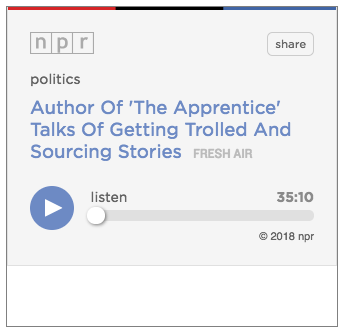
Two weeks ago, FRESH AIR’s Terry Gross interviewed Pulitzer Prize winning journalist Greg Miller about his coverage of the Trump Administration, and it the interview is absolutely chilling. For almost two years, President Trump has denied Russia interfered in our election in spite of the evidence presented by American intelligence agencies and journalists. Washington Post reporter Greg Miller has broken stories that have revealed new information to the public about that interference and about connections between the Trump campaign, and in this interview, he talks about receiving death threats and being trolled as a result of his commitment to report the truth.
For more than two weeks, the world has been watching the story of missing Saudi journalist Jamal Khashoggi. As I write, Turkish investigators wearing hazmat suits are searching the Saudi consul general’s residence in Istanbul. Khashoggi, a Washington Post columnist, visited the Saudi consulate in Istanbul on October 2 to obtain papers that would have allowed him to marry his Turkish fiancée. The insider-turned-critic of the Saudi government has not been seen since. Turkish officials have told CNN that Khashoggi’s body was dismembered after he was killed in the consulate.
Jamal Khashoggi wrote this OpEd two weeks before his disappearance.
All the words I can think of to write today come up empty. If you want to do something, listen to the interview with WaPo Greg Miller about what he faces in this country, and consider writing a thank you letter to The Washington Post thanking them for their service. As Greg shared, they read their mail, and their commitment to keeping all of us informed about the truth is what keeps them doing what they’re doing.
Update: tonight, the Washington Post’s Global Opinions editor published what will be Jamal Khashoggi’s final published piece:
A note from Karen Attiah, Global Opinions editor
I received this column from Jamal Khashoggi’s translator and assistant the day after Jamal was reported missing in Istanbul. The Post held off publishing it because we hoped Jamal would come back to us so that he and I could edit it together. Now I have to accept: That is not going to happen. This is the last piece of his I will edit for The Post. This column perfectly captures his commitment and passion for freedom in the Arab world. A freedom he apparently gave his life for. I will be forever grateful he chose The Post as his final journalistic home one year ago and gave us the chance to work together.
Congress shall make no law respecting an establishment of religion, or prohibiting the free exercise thereof; or abridging the freedom of speech, or of the press; or the right of the people peaceably to assemble, and to petition the Government for a redress of grievances. – The First Amendment
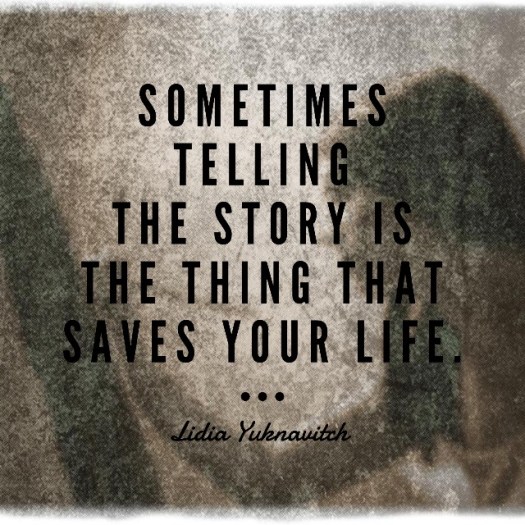
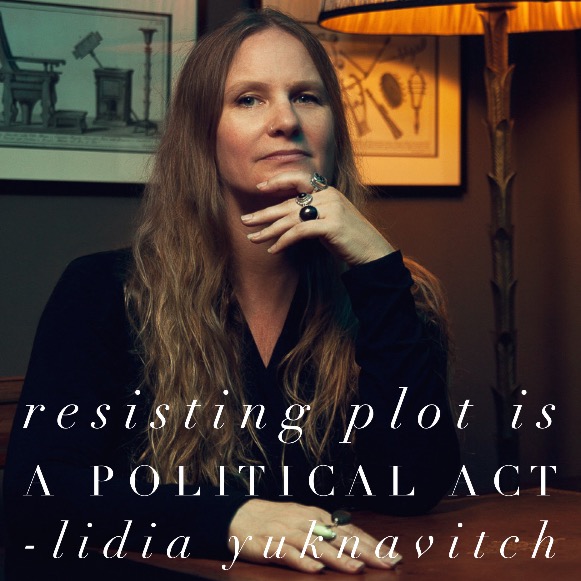
When Lidia Yuknavitch spoke these words at her workshop last May, I scribbled them in my notebook and something broke loose. My entire life has resisted plot, and seeing my writing life in this context was more than pivotal – it’s become a daily mantra. (If you’re nodding your head, you know.) Art as an act of political resistance is the theme of Step 9, but first, a quick announcement:
In November, I’ll be joining Lidia Yuknavitch as an online workshop leader for Epistemologies: Writing to Unmake and Remake Meaning. Over the past year, I’ve been a columnist and the curator of Corporeal Clamor, a curated series at Corporeal Writing. Part of the CW philosophy is “leading people into new and unknown territories from which they can make art,” and because I so love collaborating with other writers, this new role at Corporeal Writing sets my heart on fire.
Over the past two years, the writers I’ve met through Corporeal Writing are part of a revolution. They’re publishing pieces like this one by my friend Marissa in Harper’s Bazaar, and last week, NPR featured artist Laura Gibson’s song “Domestication.” Laura was working on lyrics to the song when she took the “Exhausting Metaphor” workshop at Corporeal Writing a year ago. As an added bonus, Anya Pearson, who she met at the workshop, plays a character in the video.
This is what Lidia means when she calls Corporeal Writing “a creative process that values participant collaboration.” If this idea sets a fire inside of you and you’ve got something to say, come write with us.
Step 9: Leaflets, Pamphlets, and Books
Step 9 in the “blueprint” From Dictatorship to Democracy emphasizes the critical role of artists and intellectuals in making political and social change. Lidia Yuknavitch’s The Book of Joan was released just after T– entered the White House, and the post-apocalyptic nature of the work struck a chord with the public.
From the New York Times Book Review:
“Telling the truth with precision and rage and a visionary’s eye, using both realism and fabulism, is one way to break through the white noise of a consumerist culture that tries to commodify post-apocalyptic fiction, to render it safe.” – Jeff VanderMeer, A Brilliant, Incendiary Joan of Arc Story for a Ravaged Earth, The New York Times
Throughout history, times of political turmoil have been influenced by works of art. My project 3.5% was inspired by a pamphlet by Gene Sharp that has been passed around the globe since its release in 1993. Others on the list of transgressive game-changers:
Before I move on to Step 8, you’ve probably heard that today is the last day to register to vote in most states. A lot of people still haven’t. On Sunday, Taylor Swift’s Instagram post encouraging her 112 million followers to vote saw a flood of new registrations nationwide.
“We are up to 65,000 registrations in a single 24-hour period since T. Swift’s post,” said Kamari Guthrie, director of communications for Vote.org.
Not sure if you’re registered to vote?Vote.org makes it easy. Pass the link around – send an email, post it on social media, or text your contacts with the link.
Once you fill in your address, here’s what you’ll see. It’s that easy.
Step 8: Banners, Posters, and Displays
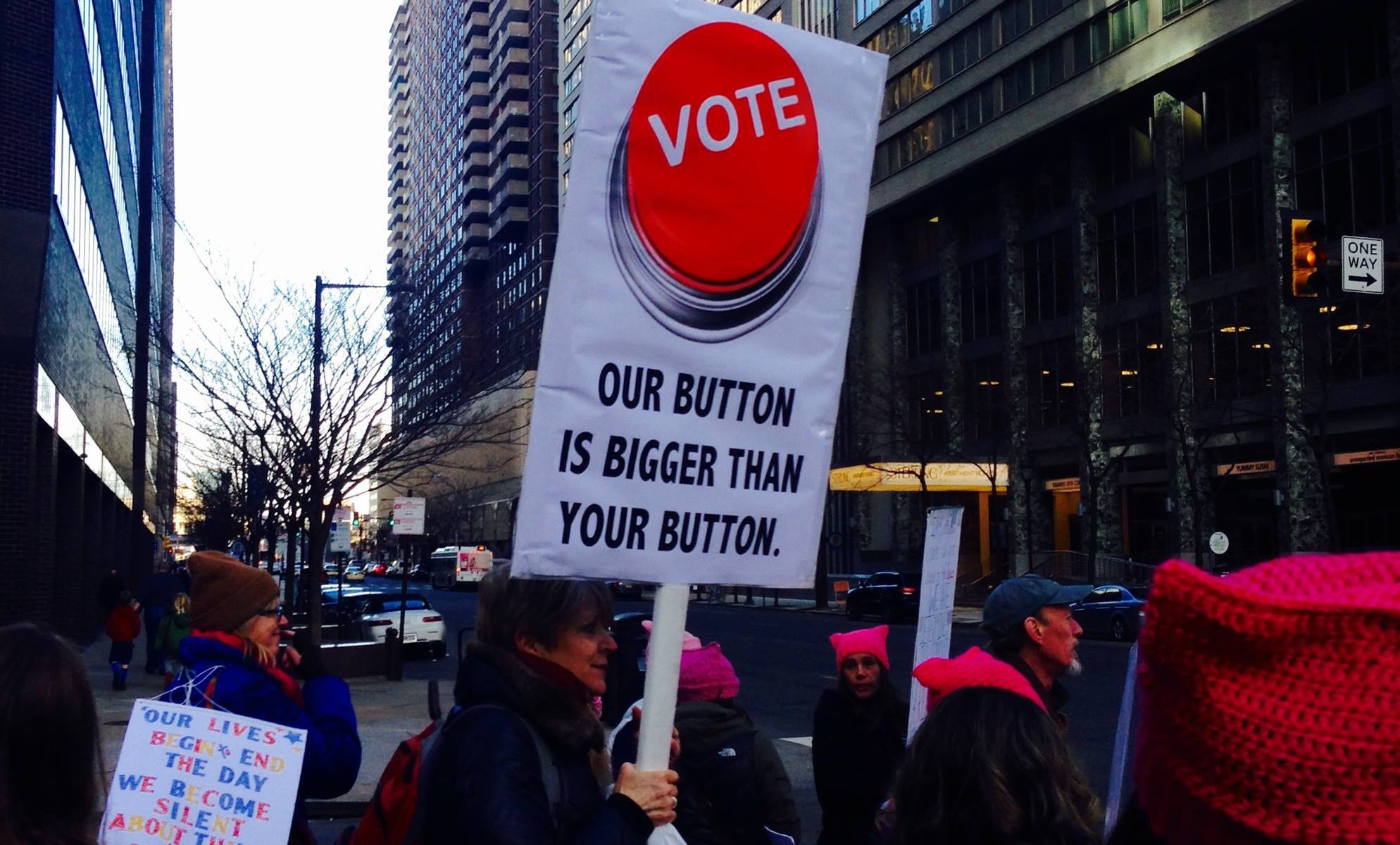
Step 8 in the blueprint for democracy does two important things: it sends a visible, often viral message and it strengthens the resolve of the 3.5%. That’s how this plan works: when one of us needs more coffee, there’s always someone waiting with refills.
“Girl, hold my earrings.”
– Statue of Liberty, Women’s March on Philadelphia, January 2018
photo credit: Leigh Hopkins
“Researchers used to say that no government can survive if just 5% of its population rose up against it, but what the research showed is that no single campaigns failed during the time period after they’d achieved the active sustained participation of just 3.5 percent of the population.” – Erica Chenoweth
Last night, I cried, but this morning, on my birthday, I woke up 50 and full of rage.
For weeks, I’ve been putting my fury into grassroots organizing and releasing the steps from From Dictatorship to Democracy – a pamphlet based on forty years of non-violent methods of demonstration – written and printed by Professor Gene Sharp. Now in its fourth edition, the pamphlet has been translated into thirty-one languages. It was passed hand-to-hand as a photocopied pamphlet from Burma to Indonesia, Serbia and most recently Egypt, Tunisia and Syria, with dissent in China also reported. Surreptitiously handed out amongst youth uprisings the world over, this how-to guide played a role in successful uprisings across the globe.
Just 3.5% of us engaging in sustained non-violent action – that’s what this takes.
Steps 1-6 were on the list of formal actions, but today we move on to the nonviolent informal actions, the actions that might seem harmless, but are on the playlist of every successful nonviolent campaign.
This is where we laugh at them.
This slideshow requires JavaScript.
– images courtesy of Marilyn Wood, a fellow activist and friend, taken during DC demonstrations on Thursday. Senator Elizabeth Warren was the only person who joined them in the streets. 300 people were arrested. Marilyn wrote to me: “It matters most that we fight back.”
It’s the eve of the vote that may confirm Brett Kavanaugh as Supreme Court Justice, and if the collective wave of rage and grief is about to pull you under, I’m here to ask you to hang in there. Not because I want to try to convince you that what seems inevitable won’t happen – but because our voices deserve to be heard.
In the words of Senator Maxine Waters, “I will not yield.”
Thirty years from now, I want to look be able to look back on this night and remember that I didn’t stay silent. Here are the calls I’m making, and if you want to join me, stop by and tell me what happened when you called.
Call these Senators tonight
Lisa Murkowski: 202-224-6665
to urge her to stay the course / VOTE NO on Kavanaugh
Susan Collins: 202-224-2523
to tell her she has just betrayed every survivor, and she can still VOTE NO on Kavanaugh
Jeff Flake: 202-224-4521
to remember the women in the elevator, and he can still VOTE NO on Kavanaugh
Joe Manchin: (202) 224-3954
to remind him that he can change his mind VOTE NO on Kavanaugh
Lindsey Graham: (202) 224-5972
to remind him that John McCain is watching
Joe Donnelly: (202) 224-4814
to ask him to VOTE NO on Kavanaugh (and grow a pair while he’s at it)
Then I’ll call my own senators, one Democrat (“thank you”) and one Republican (“Pennsylvania will vote you out”) and call it a night.
No, I will not yield.
Why do I keep posting these steps? Because research shows that no government can survive if just 3.5% of the population maintains:
active
sustained
non-violent
participation.
There’s a playbook, and I’ve got a copy. Societies have passed it around the globe, and it works. Every time.
Call your Senators, then pour yourself a drink or order a pizza and come tell me about it.






 In November, I’ll be joining Lidia Yuknavitch as an online workshop leader for






 LEIGH HOPKINS